Loans for people with bad credit

A personal signature loan is money loaned to you on your signature alone. You are not required to pledge your home or any other assets. The interest rate on these loans can vary greatly depending on your personal credit. After you join our services, you will be directed to your Members Account Site which you will have access to several services that provide personal loans even with a bad credit history.

Saturday, June 29, 2013

What Do You Need to Provide for a Vehicle Loan?

What Do You Need to Provide for a Vehicle Loan?

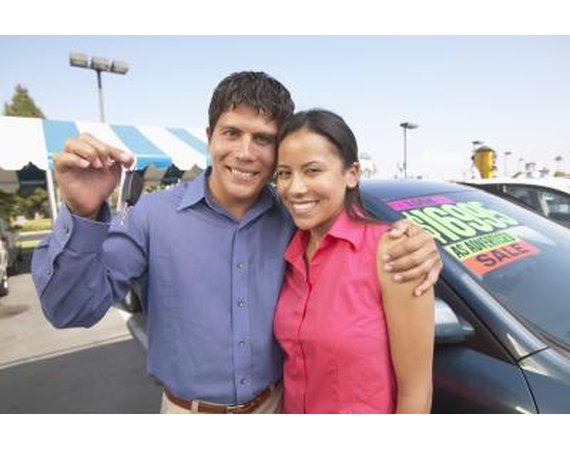
The initial stages of applying for an auto loan are similar to the process of applying for any other form of unsecured credit. The most important decision to make before buying your new car is whether to shop by lender or dealer. If you find a car at a dealership that insists you use a specific lender, the terms may be less favorable than those offered by a major bank.

Authorized Dealer

    Many lenders will lend you money to buy a car only if you're dealing with an "authorized" trader -- a firm they're happy to do business with. If a loan provider stipulates that you have to buy a car from a dealer it's approved to qualify for an auto loan, ask for a list of authorized traders near you. Some lenders offer a function to search for authorized dealers on their website. You won't need to submit the details of the dealership you're considering when you make your initial application, but make sure that you're using a trader that has the approval of your chosen lender before you proceed. If you're not fussy about what company you use as a lender, ask about financing at any dealership. If you decide to use a lender recommended by your dealer, make sure you thoroughly read the terms and conditions of your loan before signing anything.

Personal Details

    When making your initial application -- be it online, over the phone or in person -- you must provide a range of personal details. Give your full name and address and any previous addresses if you've lived in your current home for less than three years. Submit details about your employment, including your annual income. Nearly all lenders need your Social Security number, while others may ask for additional details such as your driver's license number. The information you provide is checked against records held on you by credit bureaus to confirm your identity and assess your credit-worthiness.

Proof

    If the checks carried out by your lender prove unsatisfactory, you may be asked to provide further proof of your identity, address or income. Forms of accepted verification vary by lender, but state-issued documentation, utility bills, bank statements and pay slips from your employer commonly are requested.

Documentation

    Before your loan is approved and you drive your new car off the lot, your lender needs a purchase order detailing the full price of your car, including any extras, from the dealer. You also need to provide proof of full insurance coverage if your lender is to be named as the lien holder.

Can I Get Car Financing if I Receive Unemployment?

Unemployment payments are temporary. Some lenders won't consider extending a loan to someone with a temporary income, although other lenders might, depending on your credit score. Low unemployment wages tend to result in high debt-to-income ratios -- particularly for those used to substantial incomes -- which are also used to determine a loan approval.

Income

    Your lender might accept other forms of income from rental properties, child support, disability, social security or a pension. If you earn additional income, find proof of income statements to provide to your lender for your application. Some lenders don't accept bank statements to prove income, while others do. You'll have to search for a lender that can assist you based on your circumstances. If you're nearing an unemployment extension period, wait until after you're approved for your extension. Otherwise, the lender may assume your unemployment period is nearing its expiration.

Finding a Lender

    Compare lender interest rate offers as you normally would. Once you narrow your loan options to several providers, call the lender's loan departments to inquire about income requirements. You may find a lender who accepts unemployment wages as income. Otherwise, consider using a dealership for financing. Many dealerships work with numerous lenders, so it may know of one that can approve a loan for someone in your circumstances. Consider using a buy-here, pay-here lot, which may charge higher interest rates but is also more lenient with income and credit issues.

Loan Restrictions

    You might end up with a restricted loan because of the amount of your unemployment wages. If you have a poor debt-to-income ratio, you might find a lender to approve you but only for a certain monthly payment. For example, if you apply for a $20,000 loan, the lender may approve you for only $12,000, which may result in a large down payment. Or you might have to choose a different car, even with good credit. Based on other debts listed in your credit report, the lender may determine that you can afford a car payment of only $120 or less, restricting the cars you can finance.

Co-Signers

    To avoid a restrictive loan or a large down payment, apply for a car loan with a co-signer. A co-signer's credit history, score and income secure your auto loan. If you have excellent credit, a lender might allow a fair-credit co-signer for income purposes only. With poor credit, your co-signer should have good to excellent credit and debt-to-income ratio. If you default on your auto loan, the co-signer's credit suffers, which means you might find it hard to find a willing co-signer. Ask close friends or family members to help.

Friday, June 28, 2013

Pros & Cons of Financing a Car

Pros & Cons of Financing a Car

You may have seen TV commercials, radio ads or newspaper ads from companies offering to help finance your car. If you're in the market for a car, you've probably asked yourself if getting an auto loan is worth it or not. The answer depends on your financial status and whether or not you can afford a car loan.

Credit Score

    When you finance a car, you affect your credit score either in a positive way or negative way. If you consistently make your monthly payments, then your credit score will increase (assuming you're not hurting your score elsewhere). If you don't make your payments, however, your credit score will decrease. As long as you can afford the monthly payments, then financing a car will help your score in the long run. If you doubt your ability to make the payments, then buying a less expensive car with cash is probably the way to go.

Debt

    While financing a car looks good on your credit score as long as you make the payments, it's not going to look good in your bank account. Car loans are considered unpaid debt, which can cause problems if your job is not secure or you do not have a large savings fund. Paying cash for a car removes the debt factor, because you don't need to pay anything else (repairs notwithstanding). Unless you qualify for zero percent interest rates, you will also pay more for the car with a loan than if you paid in cash, due to interest.

Warranty

    Almost all new cars come with a warranty, some as long as 100,000 miles. Warranties allow you to relax if something happens to your car, such as a $3,000 transmission problem. Warranties are especially important on used cars, because the reliability of a used car is typically less than a new car.

Insurance

    When you sign the loan papers, you agree to pay back the financial company or bank for the amount of the loan. You also agree to do it on their terms, which usually means that you must purchase comprehensive car insurance. Comprehensive auto insurance covers your car in case of any damages and anyone involved in the accident. The cost of comprehensive coverage depends on the auto insurance company, but typically costs significantly more than just purchasing liability insurance. You normally cannot drop comprehensive insurance until you pay back the loan.

Saturday, June 22, 2013

Car Buying Help

Buying a used or new car often requires applying for a car loan and negotiating the sale price of the automobile. Seasoned car buyers know how to get the best price for a car, and they know the factors a lender takes into account when approving loan applications. Familiarize yourself with car buying tips to help ensure a smooth deal.

Credit and Interest Rates

    It's possible to finance a car with bad credit. However, your credit history and credit score impacts the interest rate a finance company gives on the auto loan. Finance companies make money by charging interest on each loan; and the lower your credit rating, the higher the interest on the car loan. Improving bad credit, or simply improving your score to acquire the best rate, involves paying bills on time and keeping debt on credit cards to a minimum.

Negotiating the Price

    Knowing the invoice price of a new car can provide a price point when negotiating the price of an automobile. Invoice price refers to the dollar amount that dealerships pay the manufacturer. Dealerships increase the invoice price to make money on each deal, and this increase is called the sticker price. Research invoice prices with the help of consumer car buying guides such as Edmunds.com.

Buy Within Your Means

    The interest rate and sale price determines the monthly payment on a vehicle loan. Carefully check your budget to determine an affordable monthly payment. Getting a preapproval from a bank or finance company beforehand eliminates the guesswork. These companies will check your credit, income and current debts, and preapprove you for an auto loan amount before you step foot on a dealership's floor.

Other Considerations

    Buying a car with no credit history or a bad credit history is easier with a down payment and co-signer. Down payments reduce the amount financed through a bank, and co-signers (someone with good credit) are held responsible for monthly payments if you default. Down payments between 20 and 25 percent of the sale price are typical. Keeping track of tax returns and income also helps the approval process because lenders will need to verify employment and see copies of paycheck stubs before approving your auto loan application.

Is it Possible to Get Out of Car Lease if the Car is a Lemon?

You can't know everything about a car when you buy it. Unfortunately, a car that looked good on the lot can start falling apart on the drive home. There is legal protection for people who end up with lemons. In many states, the protection extends to both lessees and buyers.

Definition

    Your car must meet your state's definition of a lemon before you can take any legal action. Generally, a car must have a defect that affects its value or safety and a reasonable number of attempts must have been made to repair the vehicle. The defect also must happen within a certain mileage or time limit, typically 12,000 miles or one year. In some states, a car must meet two criteria -- a set number of failed repair attempts for the same defect and a set time period out of service. In other states, the car may meet either of those limits. A few states, such as Maryland and Hawaii, will designate the car as a lemon with just one failed repair attempt if the defect is something that can be life-threatening, such as a problem with the brakes or steering system.

Laws

    The laws governing the conditions under which consumers may petition for reimbursement of the lease price of a car are under the jurisdiction of individual states. While many states' lemon laws cover leases, there may be special provisions. It's important to understand your rights before signing a lease agreement.

Compensation

    Lemon laws allow consumers who can prove they have a lemon to gain reimbursement from the manufacturer. Those who have purchased cars can choose between a refund or a replacement. Lessees sometimes have the same choice, but in many cases the holder of a leased lemon is only entitled to a refund. The refund includes all payments and fees that you've made minus some usage cost that is based on the mileage of the vehicle.

Considerations

    If you think you have leased a lemon, seek legal representation. There are lawyers who specialize consumer laws. Look for a lawyer who works on contingency. This means that you do not have to pay an upfront fee, typically paying only if the lawyer wins your case. You also need to keep good records, documenting the mechanical problems and the attempts to repair.

How to Buy a Hearse

Though typically used by funeral homes, anyone can buy a new or used hearse. If you are a collector, finding and buying a hearse is similar to purchasing any other vehicle. The hearse is a heavy vehicle with the typical gas mileage ranging between 10 and 15 miles per gallon. A variety of hearse models are available since the older models actually doubled as ambulances.

Instructions

    1

    Look in your local newspaper classifieds for someone in the area offering a hearse for sale. Focus on the section featuring collector cars and limousines listings.

    2

    Browse online classifieds on sites such as Auto Trader, Hemmings and eBay Motors (see Resources). Quickly find the hearse listings by doing a keyword search for "hearse" on the sites. The listings you'll find will be from all over the United States, not just your local area.

    3

    Shop for a brand new hearse from sites such as CW Coach Sales or Hearse Works (see Resources).

    4

    Inspect the hearse for problems, if you are buying used and come across a vehicle you are interested in buying. Expensive problems include broken glass because hearse glass is custom made. Engine problems in models older than the 1970s can be difficult to repair.

Friday, June 21, 2013

How to Prove a Breach of Contract in a Car Purchase

How to Prove a Breach of Contract in a Car Purchase

Buying a car requires a legally binding contract. This contract states that the seller certifies the vehicle as being in a certain condition, while the buyer agrees to pay a set amount for said car. The seller can easily cancel the contract if the seller refuses to honor the contract. The buyer will need to do a bit more work proving that the seller has breached the contract by not delivering the vehicle in the stated condition.

Instructions

    1

    Review the original sales contract. Focus on claims of functionality in throughout the contract. Highlight these claims.

    2

    Take the car to an ASE-certified mechanic on duty at a licensed garage. Tell him that you suspect a problem with the vehicle. Pay the mechanic to inspect the car and write a report of all defects or damage.

    3

    Review the report with the mechanic. Photograph every defect on the vehicle as he points them out to you.

    4

    Make a list of all of the defects. Add details to the list. Give the list to the mechanic for review and his signature.

    5

    Leave the car at the garage throughout the process. Get an invoice from the mechanic for storage charges.

    6

    Approach the seller with your list and photographs. Demand a refund in exchange for the vehicle. Base your demand on a breach of contract. Quote the contract where it says that there are no functional defects on the car.

    7

    Visit your local court clerk's office if the seller refuses to cancel the sale. File the necessary paperwork with the clerk to file a claim against the seller. Provide copies of list, your photographs and the original contract as evidence.

    8

    Attend court and contest the validity of the contract. Ask the judge to award a refund plus court costs and storage fees.