Loans for people with bad credit

A personal signature loan is money loaned to you on your signature alone. You are not required to pledge your home or any other assets. The interest rate on these loans can vary greatly depending on your personal credit. After you join our services, you will be directed to your Members Account Site which you will have access to several services that provide personal loans even with a bad credit history.

Monday, May 31, 2010

How to Sell a Car With a Bank Loan

How to Sell a Car With a Bank Loan

If you paid cash for your car or have already paid off the original bank loan, you own your car free and clear and have access to the title -- making selling the car to another individual a relatively simple process. If you're still making payments on your car and want to sell it, however, you can't sign over the car title to the buyer because you don't have the title. The bank will hold your vehicle's title until you pay off the loan balance you still owe. There are two methods for selling a car with a bank loan, depending on whether your lender holds your title at a local branch or out of state.

Instructions

Locally Held Title

    1

    Call the bank and notify the bank representative you speak with of your intentions to sell the car. Ask for a final payoff amount. Depending on whether your loan carries a prepayment penalty, the final payoff amount may differ from the amount reflected on your monthly statements.

    2

    Meet the buyer at the bank branch that holds your car's title. Instruct the buyer to make the payment directly to the bank rather than to you. Provided the purchase price equals the amount you owe on the loan, the bank will then provide you with the title.

    3

    Sign the car title over to the buyer. Fill out a bill of sale recording the date of the transaction and the purchase price.

    4

    Ask a bank employee to make two copies of the bill of sale. Give one copy to the buyer and keep one copy for your records.

Title Held Out of State

    5

    Meet with the buyer and conduct the sales transaction without the title. Fill out three copies of the bill of sale. Give one to the buyer, keep one for yourself and keep one for the Department of Motor Vehicles.

    6

    Visit the buyer's county's Department of Motor Vehicles with the buyer. Provide the DMV with a copy of the bill of sale. Request a temporary operating permit for the buyer until you can provide her with the car's title.

    7

    Pay off the vehicle loan with the proceeds from the sale. The bank will mail you the title. How quickly you will receive the car title will vary depending on the bank.

    8

    Sign your name on the title under "Seller" when you receive it in the mail. Deliver the car title to the buyer.

How to Cancel an Auto Loan Contract

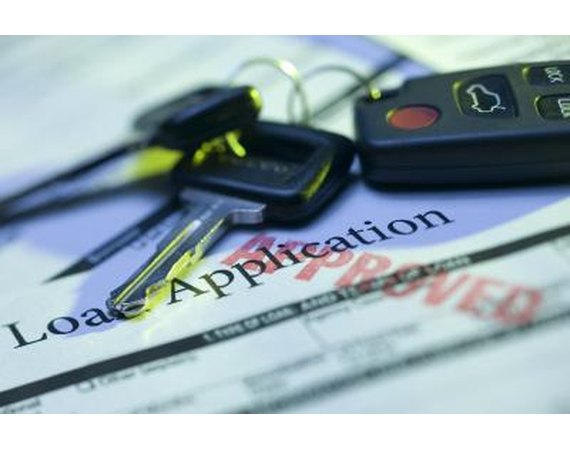
How to Cancel an Auto Loan Contract

A car loan contract is a legally binding document. When you sign the contract, you agree to the terms listed until you pay off the auto lender. Once the lender is paid, you receive full ownership of the car, and you can do as you please. Canceling the contract before that point can be challenging, but there are several options available. These options include refinancing, prepaying and settling the debt.

Instructions

Refinancing to Cancel an Auto Loan

    1

    Get a prepayment quote from your auto lender. You can speak with the lender personally, or you may be able to find this online if you manage your auto loan through the Internet.

    2

    Locate a new dealer willing to extend you an auto loan. The new loan must be in a sum large enough to cover the remainder of your existing loan.

    3

    Contact your lender to inform them you will be prepaying on the loan.

    4

    Verify that the amount you have sourced in a new loan will cover the prepayment quote and any penalties.

    5

    Pay off the loan in one lump sum with the new loan.

    6

    Ensure your previous loan is closed by running a simple credit check. The loan should not be listed as active on your credit report.

Prepaying to Cancel an Auto Loan

    7

    Start with the same prepayment quote offered by your lender.

    8

    Save enough cash to cover this sum. Alternatively, you may consider selling the car to cover this sum if you no longer desire to own the vehicle.

    9

    Contact your lender to inform them of your intent to prepay.

    10

    Make arrangements to prepay.

    11

    Take the same steps to assure the contract is no longer on your credit score. Since you did not take a loan to prepay, you are debt free on the vehicle at this point.

Settle the Debt to Cancel an Auto Loan

    12

    Contact your lender to ask for a settlement quote. A settlement is lower than prepaying in full, but it will come with credit penalties.

    13

    Seek a settlement loan or save enough cash to cover the settlement quote.

    14

    Inform the lender of your intent to settle the debt.

    15

    Pay the lender the required settlement amount in one lump sum.

    16

    Monitor your credit to see the debt has been cancelled. You will see your credit score drop. This is a result of breaking a contract without paying the penalties.

Sunday, May 30, 2010

The Disadvantages of Leasing a Vehicle

The Disadvantages of Leasing a Vehicle

Leasing a car can be appealing because monthly payments are usually lower and vehicles quickly lose value after they are purchased. Yet the potential cost of leasing a vehicle should not just be evaluated in terms of a monthly payment. People who lease cars can face significant additional costs if they exceed their mileage limits, damage their cars or terminate a lease early.

Lack of Ownership

    Leasing a vehicle does not provide the advantages of ownership. People who keep their cars for about three years or more eventually own them and are free of car payments. Purchased cars offer owners more options when it comes to replacing vehicles as well. For example, an owner may choose to keep an older vehicle that is paid off because his income has suddenly declined. People who lease vehicles do not have such flexibility, since lease payments continue no matter what financial troubles befall them.

Mileage Limits

    Leased vehicles can be expensive for people who put a lot of miles on their cars. Lease agreements often require people to pay an extra 12 to 15 cents for every mile they drive over an agreed upon limit. Preset mileage limits usually range between 12,000 and 15,000 miles per year. If you know in advance that you will exceed that range, you can add more miles to your lease contract at a discounted rate. Yet you will still have to pay about 10 cents for every mile you add.

Damage Fees

    Companies that lease cars want customers to return their vehicles in good condition so they can sell or lease them to someone else. Therefore, leasing is not the best option for someone who is not meticulous about keeping the interior and exterior of a vehicle clean and free of damage. Lessees must pay for any damage to a vehicle that the leasing company sees as exceeding normal wear and tear. Modifying a leased vehicle by adding custom parts also can be a hassle because the parts have to be removed before the car can be returned to the leasing company.

Early Termination

    Terminating a vehicle lease early can cost you as much as six months of payments, depending on the terms of your contract. That is one reason car leases are not the best option for people who frequently relocate or who are not sure how long they will be living in the same area. Relocating would require terminating a lease and would likely wipe out any savings gained from a contract that included a low down payment and low monthly expenses. Lessees who cancel early may have to make all remaining payments minus vehicle depreciation costs that have not yet occurred.

Information About Repossession of Car

Information About Repossession of Car

The Federal Trade Commission stipulates that your creditor has the right to repossess your vehicle as soon as your payment is late, if that is part of the terms of the loan agreement. Know your rights when it comes to auto repossession and be sure to communicate with your lender if your payment will be late.

Considerations

    According to CNN, a repossession is considered legally done when a repossession agent is in the vehicle or when the vehicle is off of the owner's property by way of a tow truck.

Time Frame

    Depending on the lender, a repossession may stay on your credit report for up to 10 years. The time begins when the loan is officially declared delinquent by the lender.

Features

    According to Bankruptcy Law Firms, it is possible to negotiate with a lender and get a vehicle back after repossession. How much you would have to pay on the loan to get the vehicle back depends on the lender.

Misconceptions

    A lender is not required to give written notice regarding a repossession prior to having the vehicle taken. State laws vary on when a lender must provide a borrower with information regarding the repossession after the vehicle is impounded.

Warning

    The Federal Trade Commission warns that if your lender agrees to any special considerations that allow you to avoid repossession then you should get those conditions in writing.

Auto Financing Help

Buying a car is typically one of the largest purchases that most people make. When buying a car, many people use financing to help make the purchase a little easier. If you are in the market for a new car, there are a few things about financing that you need to keep in mind.

Separate the Process

    Many people bundle the process of buying a car with the financing. They go into the dealership, choose a car and then finance the purchase with the dealer. When you begin the process of buying a car, you need to separate each component. Focus on the financing, the price of the car and the value of your trade-in separately. Dealers generally try to bundle everything together, and it often ends up working in their favor.

Shopping for Financing

    Just because you are working with a particular dealer to buy a car does not necessarily mean that you have to finance the car through them. In fact, you can generally get a better deal by shopping around with multiple lenders before agreeing to the deal. You can go to local banks in your area to get quotes on interest rates for car loans. You can also check out online auto lenders before you go into the dealership.

Credit Report

    Before you start shopping around for interest rates, you may want to look at your credit report first. You can get a copy of your credit report from each of the three major credit bureaus: Experian, Transunion and Equifax. Once you look at your credit report, you can see if there are any errors or omissions on it. If your credit score is not as high as it should be, it could end up costing you more in interest.

Dealer Incentives

    When you seek out financing from the dealer, you may also get access to incentives. For example, for qualified buyers, the dealer might offer 0 percent interest. In other cases, you may get a rebate if you finance the purchase with the dealer. If you are offered some type of incentive, you need to make sure that you do not pay more for the car than you would without these incentives.

Saturday, May 29, 2010

How to Calculate Vehicle Loan Information

How to Calculate Vehicle Loan Information

Calculating vehicle loan information is important when shopping for a car. The interest rate will be given to you by an auto dealership or bank and there is not much you can do to change it---but there are other factors you can influence, such as the length of the loan and the total loan amount. Calculating vehicle loan information used to challenging for the layman. Today, it is now possible to calculate your loan and alter the variables until the numbers work for you by using an auto loan calculator.

Instructions

    1

    Find an online auto loan calculator. Some examples can be found in the "Resources" section of this article.

    2

    Input the auto loan amount, the term (length) and the interest rate.

    3

    Change the variables until you are satisfied that they will work for your financial situation. The loan calculator will output your monthly payments.

    Increasing the term of the loan will lower your monthly payments, but you'll be paying more in interest towards the loan and the car's total cost will increase.

What Is the Difference Between a Lease & Finance?

When it comes time to get a new car or house, you have three options. You can pay for the item outright with cash, lease it or get financing to purchase it over time. Both leasing and financing require you to make monthly payments, but you can take possession of the car or home right away. Both have many advantages and disadvantages depending on your lifestyle.

Definitions

    When you sign a lease, you agree to take possession of something for a set period of time and make monthly payments. For example, when you lease a vehicle, you get to keep it for a set amount of time, as long as you make monthly payments. When you finance something, you borrow money from a lender in one lump sum and use the money to buy a house or car outright. You make monthly payments to the lender to pay off the loan, but you own the item you financed.

Advantages

    Leasing is a good option for people who need something less permanent. For example, when you lease an apartment, you can simply move at the end of the lease. Leasing often has cheaper start-up costs. Unlike financing, you typically do not have to put anything down to lease a car. However, financing allows you to own something. By owning something, such as a home, you have equity, which you can use to leverage future loans.

Disadvantages

    When you lease, your money only goes toward making the monthly payments, and you don't develop equity. Some people see this as wasting money, since you could be putting your money toward ownership. However, since financing means ownership, you also have to deal with maintenance and repairs. When you finance a car, you typically have to pay for repair costs, but many lease agreements allow you to get free repairs through the leasing agency.

Considerations

    Both leasing and financing requires you to make monthly payments. Your monthly payment amount depends on what you lease or finance, your credit score and the leasing agency or lender's requirements. Both leasing and financing can effect your credit score. Making your monthly payments on time and meeting all of the terms will raise your credit score, but missing payments or defaulting on the agreement will hurt your credit score.